JellyDazzle

What it looks like


What it does
Put on a record, a film, a livestream — anything at all — and the screen answers it. On macOS 14.2 and later JellyDazzle taps the system audio output, so it follows whatever app is playing rather than only what a microphone can hear.
On iPhone and iPad
The same engine — the same assembly core and every one of the 666 routines — now fits in your pocket. Put on a song in Spotify or Apple Music, open JellyDazzle, and set the phone down: your music keeps playing at full volume while JellyDazzle listens and paints to it.
| Lite | On battery. A softer picture at 30 frames a second, so it can play through an album without draining you dry. Low Power Mode or a warm phone keeps it here too. |
|---|---|
| Full | Plugged in. Sharper, 60 frames a second, every layer. It switches on its own, mid-show — no settings, no restart. |
| C · S · ? | Buttons in the corner for colours, shapes and help. They brighten when you touch the screen and fade while you watch. Or just tap for new colours, use two fingers for new shapes, and press and hold for what is playing. |
Why it looks different
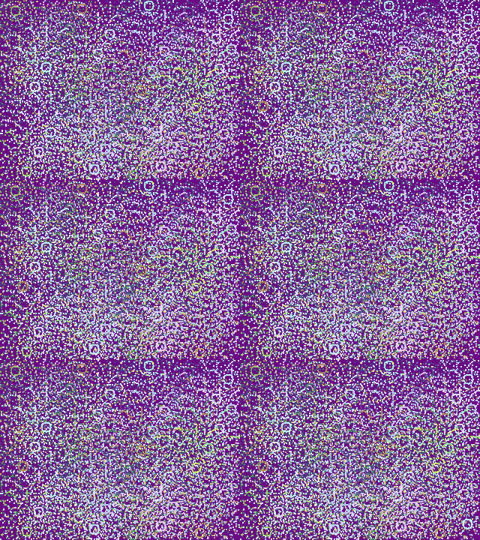
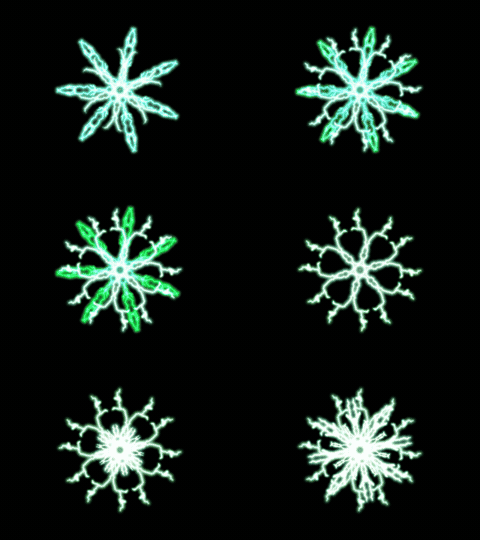
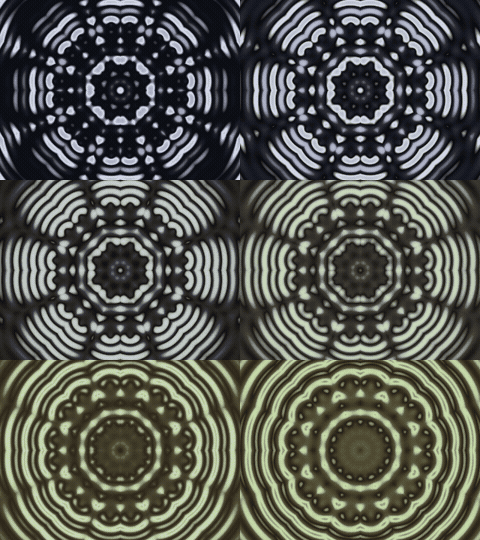
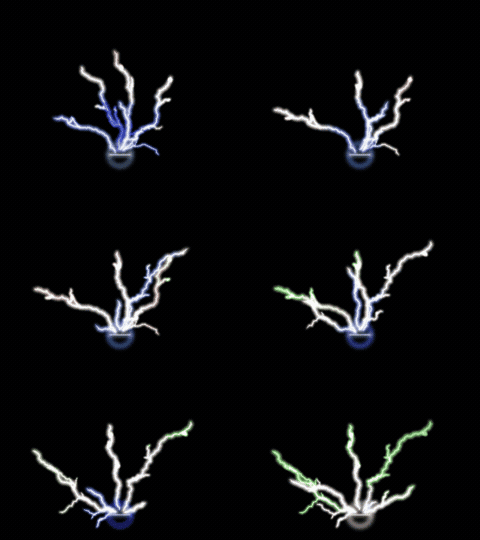
Most visualisers are one shader with a colour picker. This is an engine: fractals, plasmas, lightning, caustics, gears, weaves, nebulae, cellular growth — scheduled into layers by how much each routine moves on its own, so the stillest ones get the most transform and nothing sits static. Two routines from the same shape family never share the screen.
Two keys
| C | New colours. The palette jumps somewhere genuinely far from where it was — chosen at random among the most distant schemes, so it stays surprising. |
|---|---|
| S | New shapes. The whole cast retires and the stack fills again from the library. Colour is left alone. |
On iPhone and iPad they are the C and S buttons in the corner — or a tap for colours and two fingers for shapes. The Mac has the same buttons, and M puts the beat meter on screen.
Neither one cuts. Nothing here strobes — that is the engine's one law, and a key press is not an exemption: colour changes crossfade, routines fade out under the same envelope that retires them normally, and the release gate measures it.
It knows nothing about you
No network code, no accounts, no analytics, no advertising. Audio is turned into numbers to drive the current frame and then discarded — never recorded, never stored, never transmitted. There is nothing in the app capable of sending it. Full policy.
Requirements
An Apple Silicon Mac (M1 or later) running macOS 12 or later. The 24 engine modes are hand-written ARM64 assembly, so it does not run on Intel. On iPhone and iPad: iOS / iPadOS 15 or later.
In tribute
JellyDazzle exists because of DAZZLE.EXE, written by James R. Shiflett of Houston, Texas — at night, “a sort of therapy,” as he called it. MicroTronics released it as shareware in 1990. This is an homage, not affiliated with the original. The full story.
Open source
MIT licensed, and the whole engine is public at github.com/LIBCSYS/JellyDazzle.
Free. Signed and reviewed by Apple. Put a record on and open it.